
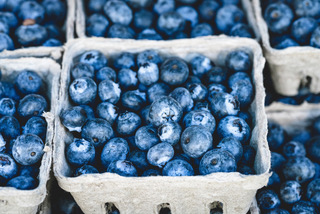
In the age of Keto and Low Carb, fruit is under fire for its high sugar content relative to other whole foods. With all the bad press, you may be wondering if fruit still has a place in a healthy diet, or whether it should be kicked to the curb alongside processed, sugary foods and beverages.
Read moreLightening Round with Susan Blum

Getting Personal with Dr. Susan Blum, Founder and Director of Blum Center for Health in Rye Brook, New York and author of two books, The Immune System Recovery Plan (Scribner; 2013), and Healing Arthritis (Scribner; 2017).
My name is:
Susan Blum
I’m a:
Mindful mother, wife, and doctor, who still practices medicine while also doing service work in communities and offering health and wellness education through various platforms.
My morning routine goes something like this:
Wake up, make my green tea, take it to my dedicated meditation space. Sit and drink quietly for 5-10 minutes, then meditate for 20 minutes. Next I have my shot of espresso, and on most days (5 days/week) go for a power walk up and down our hilly neighborhood for 45 minutes, with my dog Trixie.
Come home and make my green smoothie:
½ apple
½ lemon (peeled, but including the flesh)
2 tbs. hemp seeds
1 tbs. sunflower seeds
Sprig of fresh rosemary
Handful of baby kale
Handful of baby spinach and water.
Then off to work!
Coffee or tea?
Both!
My diet is primarily:
Gluten and dairy free vegetarian. On occasion, I have a little fish if I am traveling and stuck for what to eat.
In my fridge, I always have:
Fermented beets, tahini, olives, lemons, mineral water, salad fixings (mixed greens, radicchio, cucumber, celery, peppers, scallions, radishes, fennel) avocado.
Pantry staples are:
Pumpkin and sunflower seeds - I sprinkle them on everything, especially my salad!
EVOO, coconut oil, coconut milk for cooking, iodized salt
Organic millet, quinoa (red and white, brown rice, ramen noodles from Lotus foods, lentils, mung beans, chickpeas, adzuki beans, cannellini beans.
Go-to breakfast:
Green smoothie (*recipe above)
Lunch is normally:
A big salad: mixed greens, radicchio, cucumber, celery, peppers, scallions, radishes, fennel, avocado, olives, sunflower and pumpkin seeds; chickpeas or other legume that I made for dinner the night before. I just throw a few tbs. on top. Olive oil and lemon salad dressing. I eat this pretty much every day!!
Snacks: take em or leave em?
I don’t generally snack, but in the office we sometimes pass around the dark chocolate at 4:00! If I’m home, I might have a few Mary’s Gone Crackers with fresh avocado, or some veggies with tahini dip.
I’ve been practicing Time Restricted eating for the past year and don’t eat after dinner any more. This has made a huge difference in my ability to keep my weight stable and have lots of energy! I don’t eat from 7 pm until 11 am every day unless I am traveling or eating out.
Dinner is often:
I’m very boring, in that we have a schedule that we follow at home to make it easy to shop and plan and not stress about meals.
I always have stir-fry veggies every night. I love leeks, onions, mushrooms as a base and then rotate different nights, might be bok-choy, one night or broccoli and chard another, or asparagus and peppers. I am very adventurous!
On tofu nights, it’s a spicy asian cabbage stir fry!
For carbs: Sometimes a ½ purple potato (they are awesome!) or quinoa, or the millet and rice ramen noodles. Sometimes no carbs.
For protein: 3 nights/week I have ½ cup legumes: rotate different beans. 2 nights/week I have a sunny side up egg for dinner, and 1 night/week we have Tofu. And then, we eat out 1 night/week and I try to stay vegan in the restaurant, but about once/month I will have seafood if there is nothing else to eat on the menu!
My favorite way to get my sweat on is:
Going for a power walk/jog with my dog Trixie, up and down the hills in my area, sometimes to the neighboring nature preserve. I love heading outside. During the winter, I use our Peloton and take classes because it’s too cold to go outside!
Favorite way to downshift:
I meditate every morning for 20 minutes. I have been an avid meditation practitioner for 25 years and it is an important part of my life and keeps me grounded and mindful.
Supplements I can’t live without:
B complex
Vitamin D
Magnesium
Cod Liver oil
CoQ10
On a Friday night, you can find me:
Having Shabbat dinner at home with my husband and sometimes with family and/or friends, drinking a glass of wine and unwinding from the week.
Words to live by/life philosophy:
A few favorite quotes:
“Between stimulus and response there is a space. In that space is our power to choose our response. In our response lies our growth and our freedom.” Viktor E Frankl.
“If you don’t change direction, you will end up where you are heading” Lao Tsu.
Susan Blum, MD, MPH is an Assistant Clinical Professor in the Department of Preventive Medicine at the Icahn School of Medicine at Mount Sinai and Founder and Director of Blum Center for Health in Rye Brook, New York, where she leads a team of physicians, nurse practitioners, nutritionists and health coaches to provide cutting edge Functional and Integrative Medicine services. She’s also the author of two books, The Immune System Recovery Plan (Scribner; 2013), and Healing Arthritis (Scribner; 2017).
Thank you SUSAN for giving us a sneak peak into your wellness routine. Want to know more about SUSAN? Check her out onLINE!

Want more on Susan?
Check out the in-depth interview

Did you read…
When Did Fruit Get So Controversial?
Functional Medicine with Dr. Susan Blum
Susan Blum, MD, MPH is an Assistant Clinical Professor in the Department of Preventive Medicine at the Icahn School of Medicine at Mount Sinai and Founder and Director of Blum Center for Health in Rye Brook, New York, where she leads a team of physicians, nurse practitioners, nutritionists and health coaches to provide cutting edge Functional and Integrative Medicine services. She’s also the author of two books, The Immune System Recovery Plan (Scribner; 2013), and Healing Arthritis (Scribner; 2017).

Susan Takes The Questions:
Q) You’re a board certified medical physician, but you take a functional approach to medicine. Can you briefly explain the difference between the two approaches?
There is a big difference in both perspective and the clinical approach to treating patients. The viewpoint of conventional medicine sees the definition of Optimal Health as the absence of disease. In functional medicine, our view of Optimal Health is to function at the highest level possible, all the way to the end, and hopefully that’s into your 90’s!
This same viewpoint is seen in the clinical approach. As a doctor practicing conventional medicine, most of my time is spent giving medication to treat the symptoms of a disease that I just found. We call that downstream medicine.
Instead, as a functional medicine specialist, I spend my time as a medical detective, going upstream to where the symptoms originate. We focus on finding the cause of the problem, and treat the cause. Often times I am working with lifestyle (nutrition and stress), but also focusing on healing the gut microbiome, and environmental medicine, identifying and removing toxins from the body.
Q) What made you decide to pivot from your classical training and take an integrated, 360 degree approach to health?
I was always interested in Preventive Medicine, and went to Columbia for a Masters in Public health, in addition to my medical training, to pursue this interest. However, it was disappointing and I didn’t find what I was looking for, namely a way to address the role of nutrition and stress in causing chronic illness. I needed to look “outside the box” to get this training. This led me to The Center for Mind Body Medicine to learn more about stress and strategies to use with my patients, and The Institute for Functional Medicine to learn another operating system for my clinical practice.
And then, in 2000, I was diagnosed with Hashimoto’s thyroiditis and I was determined to figure out why I had it. I used my new functional medicine skills and training on myself and cured myself of this autoimmune issue, and the rest is history :)
Q) These days we constantly hear the term “inflammation” in relationship to disease, especially autoimmunity. What is inflammation, and what role does it play in autoimmunity.
Inflammation, by definition, is when there is redness, swelling, pain and heat in an organ or tissue. This is easy to see when you have arthritis and have it in your joints. But when you have inflammation on the inside, you can’t see it but it is causing silent damage that you might or might not feel. Inflammation itself is caused by irritating chemicals released from your immune cells that zip around your body and cause irritation on the inside. Eventually, this can damage your tissues and organs and hurt their ability to function.
Q) 24 million Americans have at least one autoimmune disease, and the numbers are steadily on the rise. What is going on?
There are several theories about why autoimmune disease is on the rise. Autoimmunity happens when the immune system makes a mistake and attacks your own body. This can happen when the immune system is damaged, or when your cells are damaged making them look abnormal and triggering an appropriate immune reaction.
In the first case, the immune system can be damaged directly from environmental toxins and from a damaged gut microbiome. 70% of the immune system develops inside the intestinal lining, and the gut microbiome is critical to help it develop properly. Over the past decade, both of these things have worsened: the environment has become more toxic and our collective gut health has worsened too, mostly because of poor diet, lots of stress, and too many antibiotics. The immune system loses “tolerance”, which means it loses its ability to know the difference between self and not self.
In the second scenario, infections and toxins can directly damage tissues and cause an autoimmune reaction. Infectious diseases like lyme and other mosquito and tick borne illnesses, and viruses like Epstein Barr, have become more common and persistent, and can be triggers for autoimmunity. When they persist in the body, they live inside cells and your immune system attacks your own tissues trying to get at these microbes. Toxins also can damage tissues in your body directly and cause an autoimmune reaction.
Q) What are two to three simple things readers can do today to improve inflammation, and their immune system?
Make sure your gut is healthy: Eat lots of fiber, and probiotic and fermented foods. Eat more plants. If you have persistent gut symptoms, seek help from an integrative medicine practitioner.
Protect yourself from environmental toxins: go to www.ewg.org to understand how to choose foods lower in pesticides, how to choose cleaning products for your home, the lowest mercury fish, the best cosmetics.
Find time every day for relaxation and introspection. Stress can damage the gut and the immune system.
Q) Hippocrates said “Let food be thy medicine and medicine be thy food.” What is the number one thing we should do when it comes to diet? Should we all avoid gluten? Are all carbs bad? Is Keto safe?
If you have an autoimmune disease you should avoid gluten. Even if you don’t have an autoimmune disease, you should test yourself by removing it for 3 weeks and then eating it again to see if you notice symptoms.
Some people with autoimmunity, especially those with lots of gut symptoms, might feel better temporarily removing grains and legumes because they are high in lectins which are hard to digest. So after, they will say that all carbs are bad. However, eventually the goal is to include the good carbs, which are whole grains in small amounts and also legumes because they are high in fiber and very good to support good gut health, in order to bind and remove toxins from the gut.
Ketogenic is well studied for cancer, and epilepsy. Some research on diabetes. I don’t like Ketogenic for a long term food plan because it encourages saturated fat which can raise cholesterol, and it doesn’t encourage enough plants to support the microbiome and liver detox system.
The long term best food plan to support the microbiome and the liver detox system is a plant forward diet, which is basically the Mediterranean Diet.
Q) What are you interested in now? Is there any new research coming out that has you really excited?
There has always been good research on calorie restriction and the positive impact on cellular aging, and on reducing chronic illness and inflammation. I am very excited about the current research that shows that you can mimic calorie restriction and gain all the benefits by practicing different fasting strategies that are much easier to live with than eating 800 calories daily for the rest of your life!
The two that we use at Blum Center are the fasting mimicking diet, which we call the 5 Day Fasting Cycle, and which we are now using for our weight loss programs. We have also worked with Organic Pharmer to create a 5-Day program that can be used during the Fasting Cycle and that exactly follows the nutritional guidelines of the Fasting Mimicking Diet.
The other thing that I am recommending to all my patients to practice in between their 5-Day Fasting Cycles, is Time Restricted Eating (sometimes called Intermittent Fasting), which is when you eat for 8 hours and fast for 16. For example you would eat from 11-7 daily. You are allowed coffee, tea in the mornings, as long as no calories. This is easy to follow and a big relief for those who have struggled for so long.
These new strategies for supporting a healthy metabolism, reducing cellular aging, and prevention and reversing chronic disease are very exciting!
You can sign up for Dr. Blum’s newsletter and learn about online programs and resources at www.blumhealthmd.com. You can also sign up for Organic Pharmer’s newsletter and stay up to date on promotions and plant-based food and weigh-loss programs, like their 5-Day Jump Start Meal Program and Fasting Cycle Meal Program for weight loss.
Thank you Susan for taking the time to talk with us about health, autoimmunity and the benefits of a holistic approach to wellness!
When Did Fruit Get So Controversial?
Check out our latest blog post