
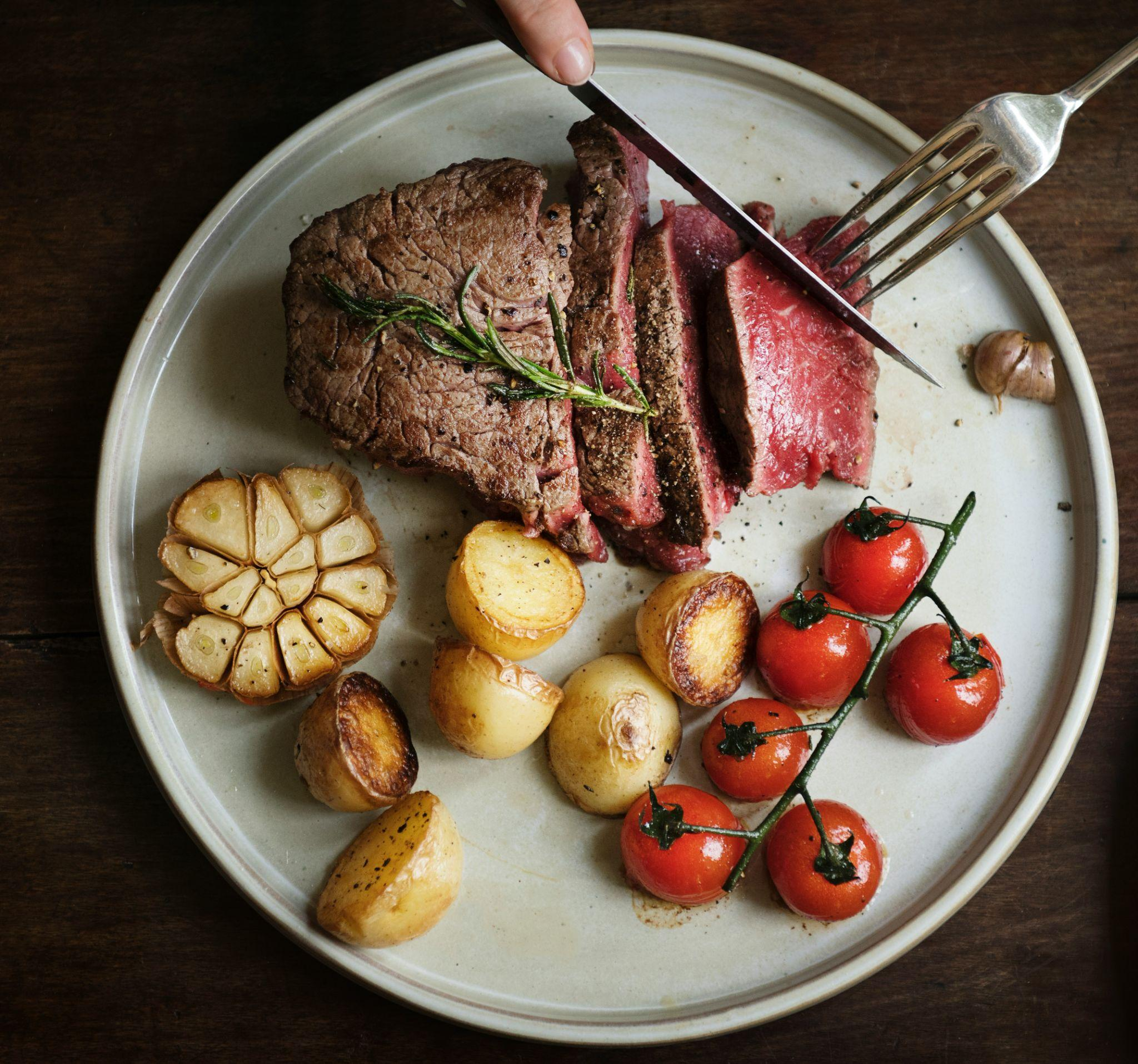
Forget counting grams from morning to night. The simpler approach is to think one meal at a time. Aim for 25 to 30 g of protein at breakfast, lunch, and dinner, which falls within the 20 to 40 g per meal range supported by research.[1] A snack can fill in the gaps: an apple with 2 tablespoons of peanut butter, or half a cup of shelled edamame, adds another 8 to 9 g.
Stay closer to 25 g if you're less active, and closer to 30 g if you're very active, older, or under a lot of stress. Three meals in that range, plus a snack, add up to roughly 85 to 100 g a day. That lands within the Dietary Guidelines range of 0.55 to 0.73 grams of protein per pound of body weight for many adults.[2]
Protein is found in more foods than you think.
Most whole foods have some protein, so if you eat a varied whole-foods diet, you're probably already close to hitting your goals. As you'll see below, no single food has to do the work. Even broccoli, spinach, peas, and whole-grain bread can contribute to your protein count.
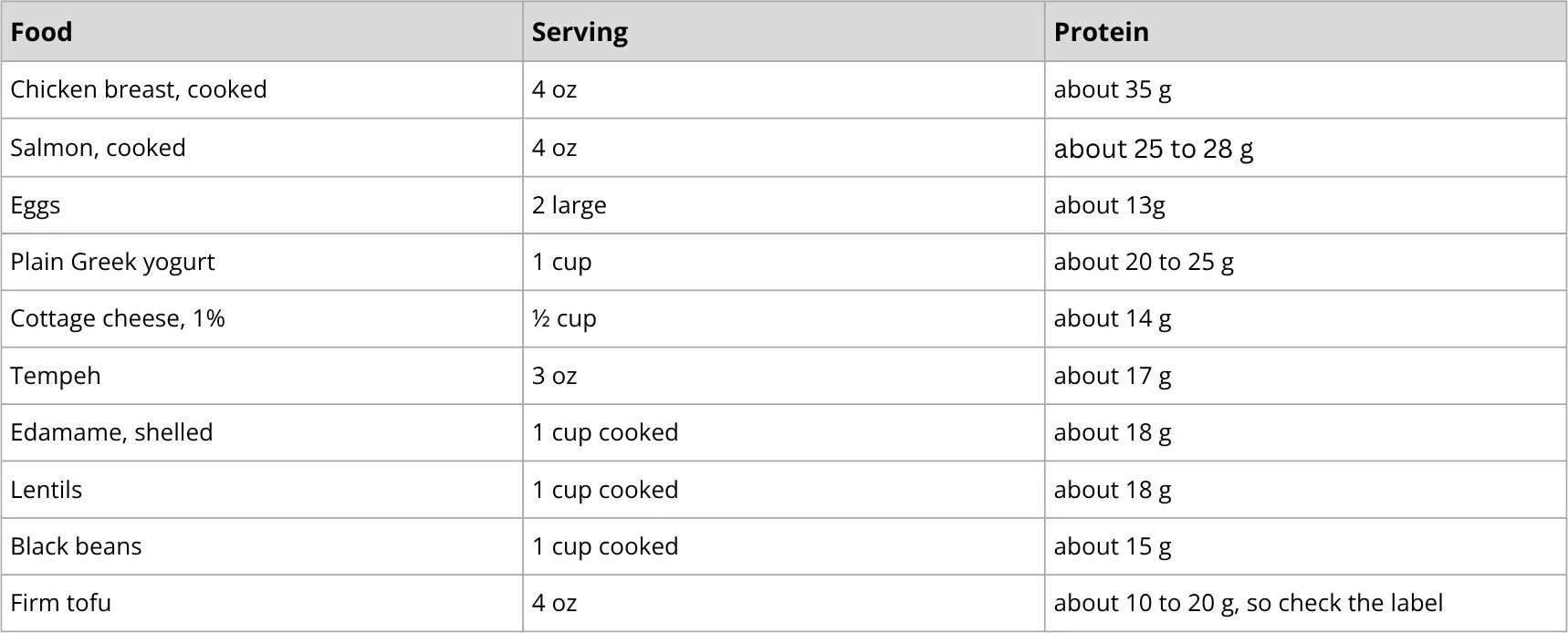
Familiar protein sources
Less familiar protein sources
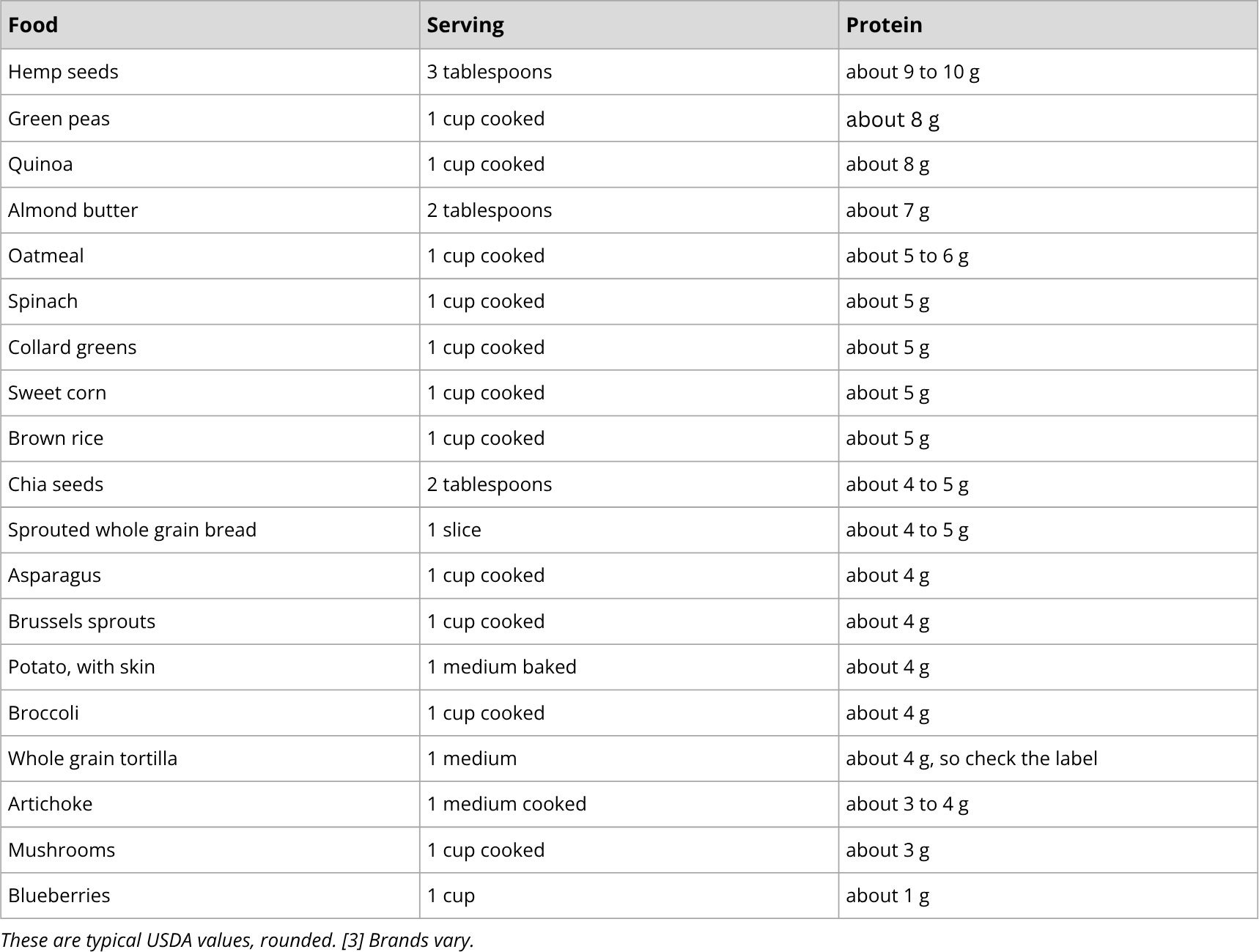
Note: Plant proteins are slightly less digestible and a little lower in a few amino acids, but eating a variety, like grains with beans or seeds, covers that. Studies show little difference in muscle strength between plant and animal protein when total protein intake is adequate.[4]
Sample meals to meet your protein needs
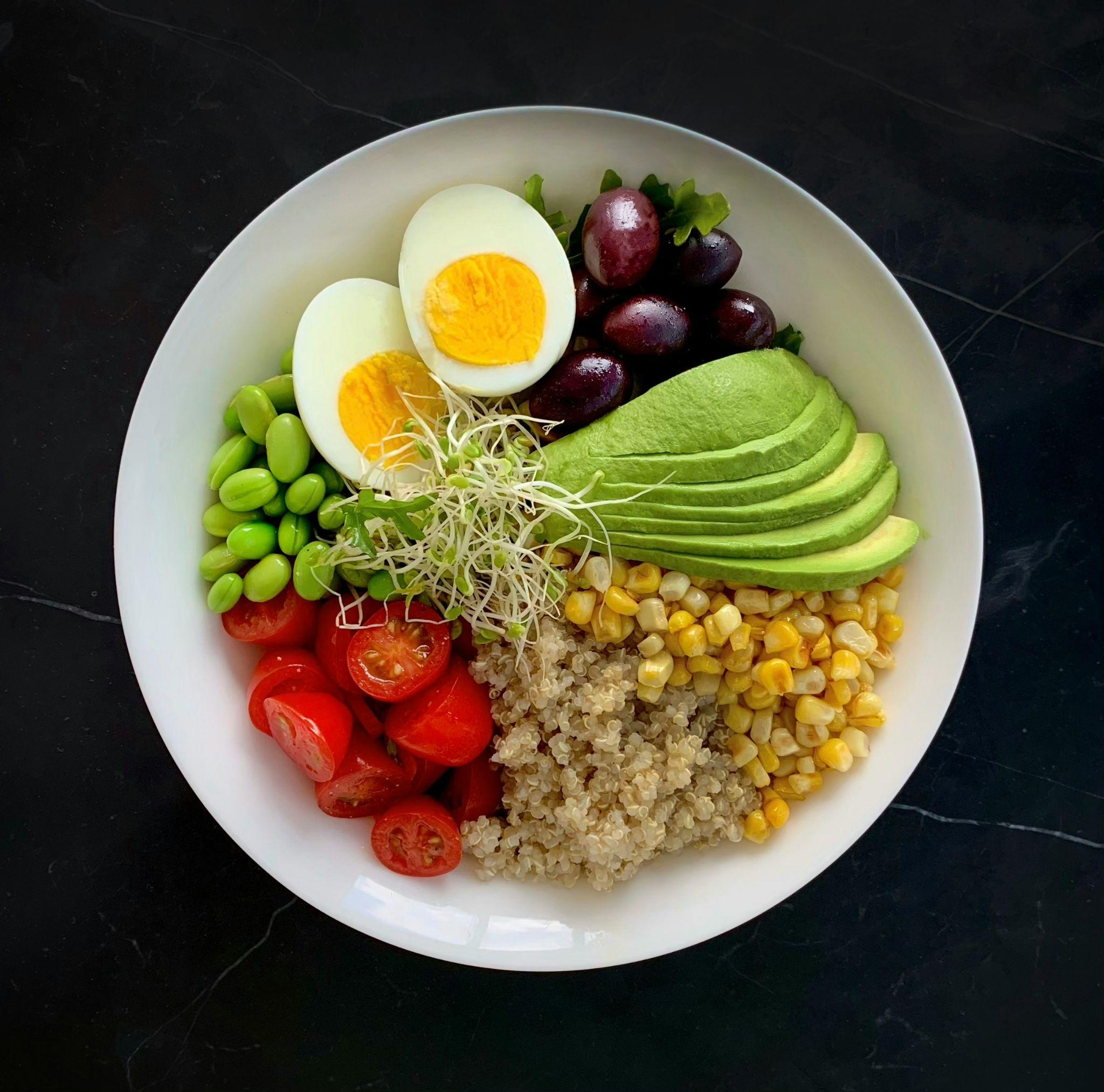
Breakfast
Greek yogurt bowl. 1 cup plain Greek yogurt, 2 tablespoons almond butter, and a handful of berries come to about 30 to 32 g.
Spinach scramble and toast. 2 whole eggs and 2 egg whites scrambled with a handful of spinach, plus a slice of sprouted whole-grain toast topped with avocado, total about 27 g.
Protein shake. 1 cup soy milk, 1 serving of protein powder, 1 tablespoon each of ground flax and chia, ½ cup berries, and 2 cups greens total about 35 to 40 g, depending on your powder.
Lunch
Vegan bean bowl. 1 cup black beans, 1 cup quinoa, 1 cup broccoli, ½ cup carrots, ½ cup mushrooms, and 1 tablespoon tahini come to about 30 g.
Lentil soup with arugula salad. One serving of the lentil soup in the next post, a salad of 2 cups arugula with 1 tablespoon pumpkin seeds, and a slice of whole grain bread come to about 32 g.
Chicken and quinoa bowl. 3 oz cooked chicken breast, ½ cup quinoa, and 1 cup roasted broccoli with a drizzle of olive oil and lemon come to about 33 g.
Dinner
Salmon, sweet potato, and spinach. 4 oz salmon, 1 medium sweet potato, and 1 cup cooked spinach come to about 32 to 35 g.
Sheet-pan chicken, chickpeas, and broccoli. 3 oz chicken, ¼ cup chickpeas, and 1 cup broccoli, roasted together, total about 33 g.
Tofu and veggie stir-fry. 5 oz extra-firm tofu, ½ cup shelled edamame, ½ cup brown rice, and 1 cup broccoli and peppers total about 32 g. Tofu varies by brand, so check the label.
Snack
An apple with 2 tablespoons of peanut butter: about 8 g
1 cup edamame in pods (about ½ cup shelled): about 9 g
½ cup cottage cheese with ½ cup berries: about 15 g
Don’t let protein crowd out the rest of your plate
With all the focus on protein, it’s easy to forget everything else your body needs. Vegetables, fruits, whole grains, beans, nuts, and seeds add fiber, vitamins, minerals, and antioxidants, plus a little protein of their own. Most of us don’t get enough fiber, so pairing your protein with these foods is a win on every front. Think of protein as the anchor of your meal, not the whole meal.
Keep it simple
You don't need an app, a food scale, or a perfect number at every meal. Think of protein as something you build into your day, not something you chase. Anchor each meal with a good protein-rich source, and let the vegetables, grains, beans, nuts, and seeds do the rest.
Ready to try it?
Start with my Protein-Packed Vegan Lentil Soup. It's hearty, comforting, and delivers about 25 g of plant protein per bowl. Add a simple arugula salad and a slice of whole-grain bread, and you're at 32 g, right in your target for the meal. It keeps beautifully in the fridge or freezer, so make a pot this weekend, and you're set for lunch all week.
Sources
Jäger R, et al. International Society of Sports Nutrition Position Stand: protein and exercise. J Int Soc Sports Nutr. 2017;14:20.
U.S. Department of Agriculture and U.S. Department of Health and Human Services. Dietary Guidelines for Americans, 2025–2030. dietaryguidelines.gov.
U.S. Department of Agriculture. FoodData Central. fdc.nal.usda.gov.
Lim MT, et al. Animal protein versus plant protein in supporting lean mass and muscle strength: a systematic review and meta-analysis of randomized controlled trials. Nutrients. 2021;13(2):661.