Lessons from the Blue Zones

If you haven’t heard the term Blue Zone before, Blue Zones refer to areas around the globe where people live longer, healthier lives than anywhere else on the planet. It’s no surprise that these regions are also home to the the lowest levels of chronic disease.

I was curious…

What could Blue Zones teach us about longevity and healthy aging? More importantly, was it possible to take the lessons of Blue Zone longevity and apply them to my own life, here in New York. Below is an excerpt from an article I wrote on Blue Zones for Wonderlust Travel where I explore that very question…

Sardinia, Italy

Sardinia, Italy

“ I first heard about Blue Zones, distinct geographic regions where people live much longer and healthier lives than anywhere else on the planet, I was more than intrigued. 

The first Blue Zone was discovered in 2000 by demographer Dr. Michel Poulain and Dr. Gianni Pes. While recording the number of centenarians living in Sardinia, Italy, they noticed that Sardinia’s oldest residents were all clustered together in the remote, mountainous area of Barbagia, rather than scattered across the Island. The story goes that Poulain, excited by this finding and what it may tell us about longevity, circled the area on the map in bright blue ink, and called it a Blue Zone.

Shortly after, National Geographic writer Dan Buettner and his team of researchers added four more regions of exceptional longevity to the list, including Okinawa, Japan; Ikaria, Greece; Nicoya Peninsula, Costa Rica; and the Seventh Day Adventist Community of Loma Linda, California, bringing the total number to five.  Although not a geographic region, the Seven Day Adventists of Lomo Linda, California follow a strict faith-based lifestyle, and outlive the rest of Americans by nearly a decade. Clearly, they know something we don’t.”

Read More….

Share

Lentils Cacciatore for a Quick, Delcious Plant-based Meal

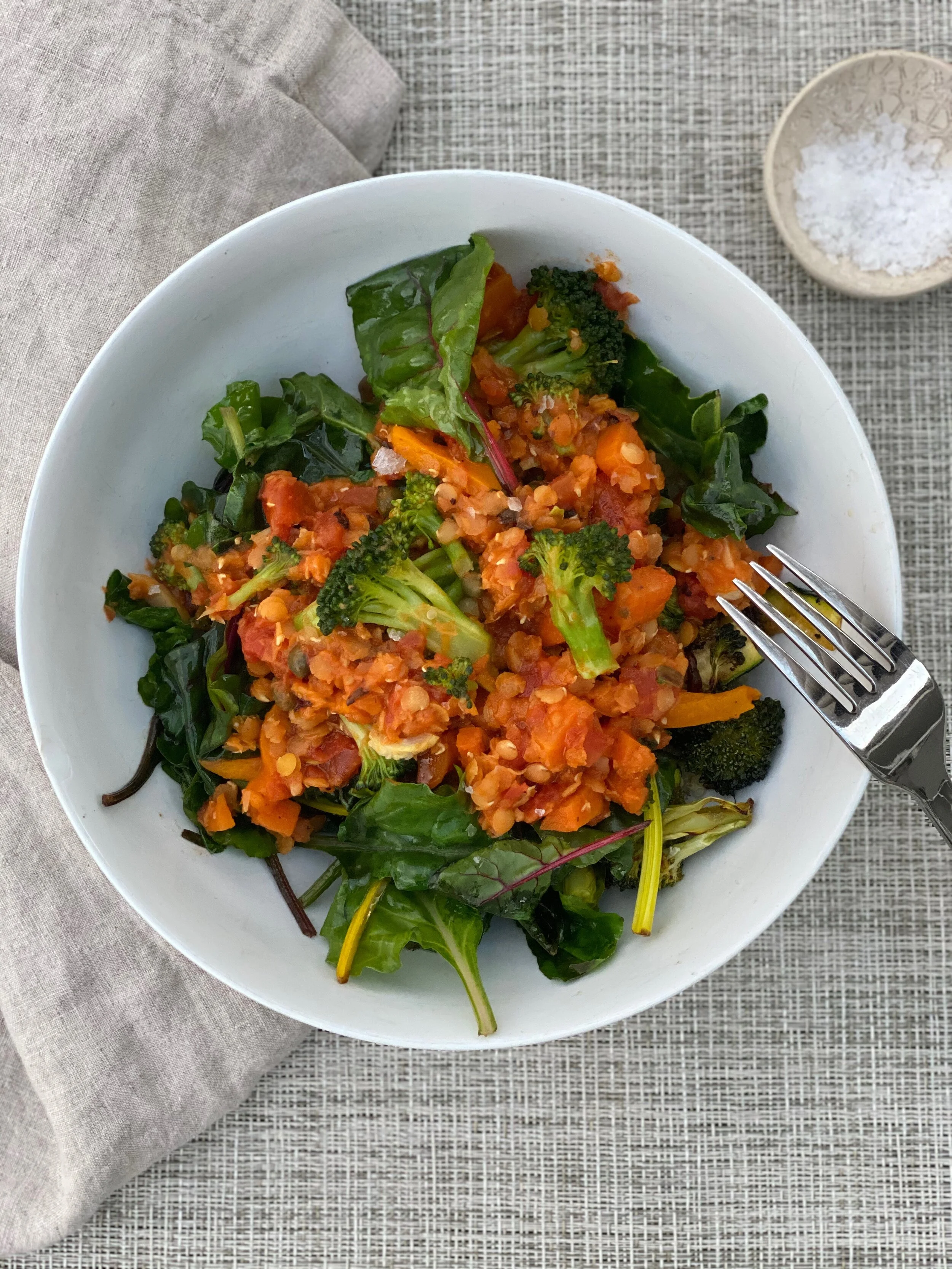
Looking to add more plant-based meals to your routine, but not sure where to start? This delicious, nourishing recipe from the New York Times has it all and only takes a few minutes to prep + under 25 minutes to cook. Plus, you can personalize it by subbing in different herbs, lentils or even canned white beans for a tuscan inspired stew. Serve it over whole grain pasta, quinoa or farro with sautéed greens and roasted veggies for a filling, satisfying dinner. I love to finish off the dish with drizzle of olive oil, a sprinkle of sea salt and a dash of crushed red pepper for a little heat.

*I sub in Rao’s Marinara Sauce for tomato paste, but if you love a rich, tomato flavor, stick with the tomato paste.

IMG_1304.jpeg

Dinner is Served:

Lentils Cacciatore served over quinoa with roasted broccoli and sautéed baby rainbow chard.

Supplementing For COVID-19 - The Dos And Dont's

As the days turn into weeks, we are learning more and more about how this virus behaves, and what we might do to support our immune system to better protect ourselves. From a Functional/Integrative medicine perspective, thus far we have been focusing on nutrients and herbs that have been well studied, in general, for their ability to support, modify or boost the immune system. We have been talking and writing extensively on helping people to choose the right supplements.


Today, there is new information that we want to share with you. Based on what we have learned about the behavior of this novel coronavirus, and in consultation with our team at Blum Center for Health, we are changing a few of our recommendations.  

supplements


Here is your update on supplements:


ACE receptors: We have learned that this virus uses the ACE receptor on cells to gain entry. We believe that one of the many actions of Vitamins A and D are to increase the number of ACE receptors on the cells, and therefore, out of an abundance of caution, we are recommending not taking extra vitamin A or D during this time. Whatever you are already taking, or whatever you have in your multi is perfectly fine, just don’t take extra supplementation.


Cytokine storm: When the virus gets going in your body, it can create something called a cytokine storm, which is when your immune system reacts vigorously and releases an enormous amount of chemicals (cytokines) and free radicals to destroy the virus. This is a good thing. However, there is concern that in some people, the coronavirus triggers an extreme cytokine storm causing among other things, the lung damage that we hear about. Even without human clinical studies to prove this, we have been studying the possibility that some immune boosting vitamins might make the cytokine storm worse.  

The Arizona University Department of Integrative medicine has made the recommendation to stop these vitamins and supplements if you develop symptoms of infection or a positive test. Symptoms would include a cough, shortness of breath with a fever (100 or over), which are the first signs that you might have COVID-19, the illness caused by this coronavirus.


Avoid these vitamins if you get sick:

  1. Elderberry

  2. Echinacea

  3. Larch Arabinogalactan

  4. Extra Vitamin D (as described above)

Considered safe to take these vitamins:  

  1. Zinc 

  2. Vitamin C

  3. Astragalus

  4. Andrographis

  5. NAC (no mention of concern so it stays on the list)  

Mushroom extracts:

  1. We are having a debate about mushroom extracts because in general we recommend them for their support of the immune system and there really is no evidence that they would be harmful if you got the coronavirus.

  2. Out of an abundance of caution, while we still recommend mushroom supplements, choose only those that have the name of the mushrooms themselves on the ingredient list.


PUTTING THIS TOGETHER


Supplements:  

  • Stick with Zinc (30 mg), Vitamin C (3 grams), and a probiotic, which you can continue even if you get sick. There are reports from China about using high dose Vitamin C for treatment, and it seems reasonable to continue to recommend going up to 6 grams daily or more if you get sick (and can tolerate it, can cause loose stools).

  • Stop the extra Vitamin A and D. And if you are taking Vitamin A and D to correct a deficiency with your doctor then you can continue but consider stopping this if you do have signs of the virus. 

  • If you have any of the other supplements at home on the “avoid if you get sick” list above, you can take them and stop if you get sick.

  • One more note: if you develop a fever, take Tylenol instead of ibuprofen (Advil). It appears to make things worse. This is another area that is rapidly evolving, and if you can’t find tylenol in the stores, you should speak to your doctor about other options.

  • Here are the things you should STILL DO for risk reduction:

  • Good gut health: which means lots of beneficial bacteria. Take a probiotic every day with at least 20 billion cfu of mixed strains of lactobacillus and bifidus species.

  • Balanced stress hormones: Get a good night’s sleep and don't overwork yourself during flu season. Stress harms your ability to fight viruses. Practice some form of mediation daily. Melissa, Blum Center’s Health Coach, wrote a great blog with tips for managing stress during this time.

  • Eat foods that are good for your immune system: Avoid processed foods and focus on fruits and veggies that are rich in antioxidants and vitamins. Support the removal of toxins by eating lots of cruciferous veggies, which boost the detox system in your liver.


Sending prayers and good wishes for you and all of us to stay safe and well during this difficult time. Dr. Blum will be having a weekly LIVE webinar every Friday at 11 am EST to answer questions. Sign up here.