

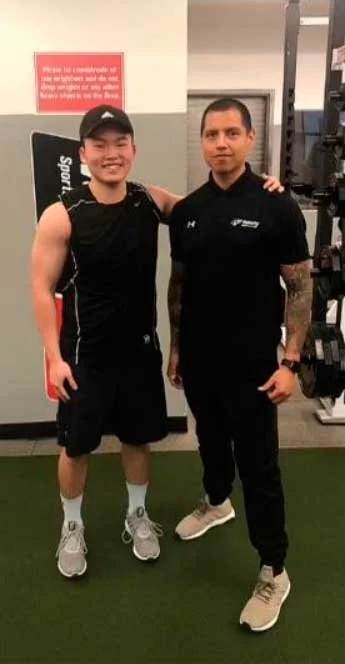
Max Castrogaleas is an Exercise Physiologist. He is a former US Marine Corps Sergeant and Marine Corps Martial Arts Instructor. After serving two tours as part of Operation Iraqi Freedom, he graduated from Queens College with a Bachelor's in Nutrition and Exercise Science and Teachers College at Columbia University with a Master’s in Applied Exercise Physiology. Max holds industry-leading certifications and several specialized certifications in fitness and athletic performance.
What made you become an Exercise Physiologist?
After being in the military and spending four years helping optimize tactical athletes' performance, I wanted to pursue a career within the fitness and wellness environment. I began my career as a performance specialist, working primarily with athletes. From there, I became passionate about helping athletes return to the field after injury. As an Exercise Physiologist, I get to help individuals of all ages and fitness levels get back to the sport, improve their fitness and wellness, and increase their capacity to perform activities of daily living.
What excites you about your job?
The ability to make a positive impact in someone's life. Whether their goal is to get back to a sport after an injury or improve overall wellness, I get to be part of that journey.
You did two tours in Iraq as part of Operation Iraqi Freedom. What was that like for you? What did you learn about yourself?
Going on my first deployment was scary. Being handed live ammunition is something no one can ever be ready for. After spending four years in the military and completing two deployments to Iraq, I learned that I could lead and develop successful teams even under very stressful situations.
How does that experience inform your work today?
When I was in the military, I had to optimize the performance of my troops before heading out to Iraq. We utilized goal setting and planning. Today, I use the same goal-oriented programming and planning to help clients reach goals and feel their best.
How do you stay current on the many shifting wellness/exercise trends?
I attend conferences and workshops through the American College of Sports Medicine, the National Strength and Conditioning Association, and other organizations. I also like participating in practical workshops to learn about applying current methods to various individuals and issues. I also am planning to attend specialty courses geared towards working with individuals with orthopedic conditions, bone health issues and sport-specific injuries and goals (racquet, team, endurance, and rotational sports).

What’s the ideal amount of exercise someone should aim to get every week?
As a baseline, you should aim to meet the general recommendations of strength training 2x per week, performing flexibility exercises 3x per week, and performing cardiovascular activities at least 150 minutes per week for moderate intensity or 75 minutes per week for high-intensity activities.
What type of exercise is most important as we age?
We have to think about well-rounded fitness and wellness, so you want to ensure you are working on strength, cardio, and flexibility.
How do you approach nutrition with a client?
If someone needs specific nutritional recommendations, this is something that a nutritionist or dietitian can provide. I provide general recommendations to help make sure that the client is aware of the general guidelines and why it’s essential to be within them.
What is your personal training philosophy?
I focus on educating clients about the importance of having a lifelong fitness and wellness journey. My goal is to help clients learn and acquire the skills necessary to be confident when exercising independently.

How important is recovery?
Recovery is a very important component but is often overlooked. Some people believe that doing more is better, but your body needs time to recover to make positive changes. Without proper recovery, you will be at a higher risk of overuse injuries or even reaching an overtrained state.
Any recovery tips?
Add recovery days into your routine, some can be active recovery days. An active recovery day can include a low-intensity workout, like walking or swimming. I also like focusing on mobility and flexibility for active recovery. For example, this can be a great day to add a yoga or stretch class into your routine. Passive recovery is just how it sounds. You are taking a day to let your body rest, recover and reset. Also, make sure to focus on your nutrition and hydration, which are essential to your body’s recovery.
What should someone look for when hiring a personal trainer?
Current and past experience, education, credentials, and training philosophy.
How do you help your patients improve their mental health and well-being?
I look for things that contribute to a person’s stress, such as sleep quality, nutrition, and gut health. Gut Health = Mental Health, so balancing the microbiome terrain is always the place I start when trying to optimize a patient’s mood and mental health. Finding nervous system supports that give a gentle hug and rebalance an overtaxed immune system also helps moderate the stress response in one’s body and can improve physical symptoms.
What are the most important things a person can do for health and longevity?
Consistency in the small things has a significant health benefit. It might sound cliche, but those everyday wellness habits are deposits into your wellness bank. They add up!
Thank you Max for taking the time to talk with us about exercise, well-being, recovery and whole body wellness.


